
Willow 4 DaVinci
Decoding human motion.
Physics, Kinetics & Biomechanical World Model Ecosystems
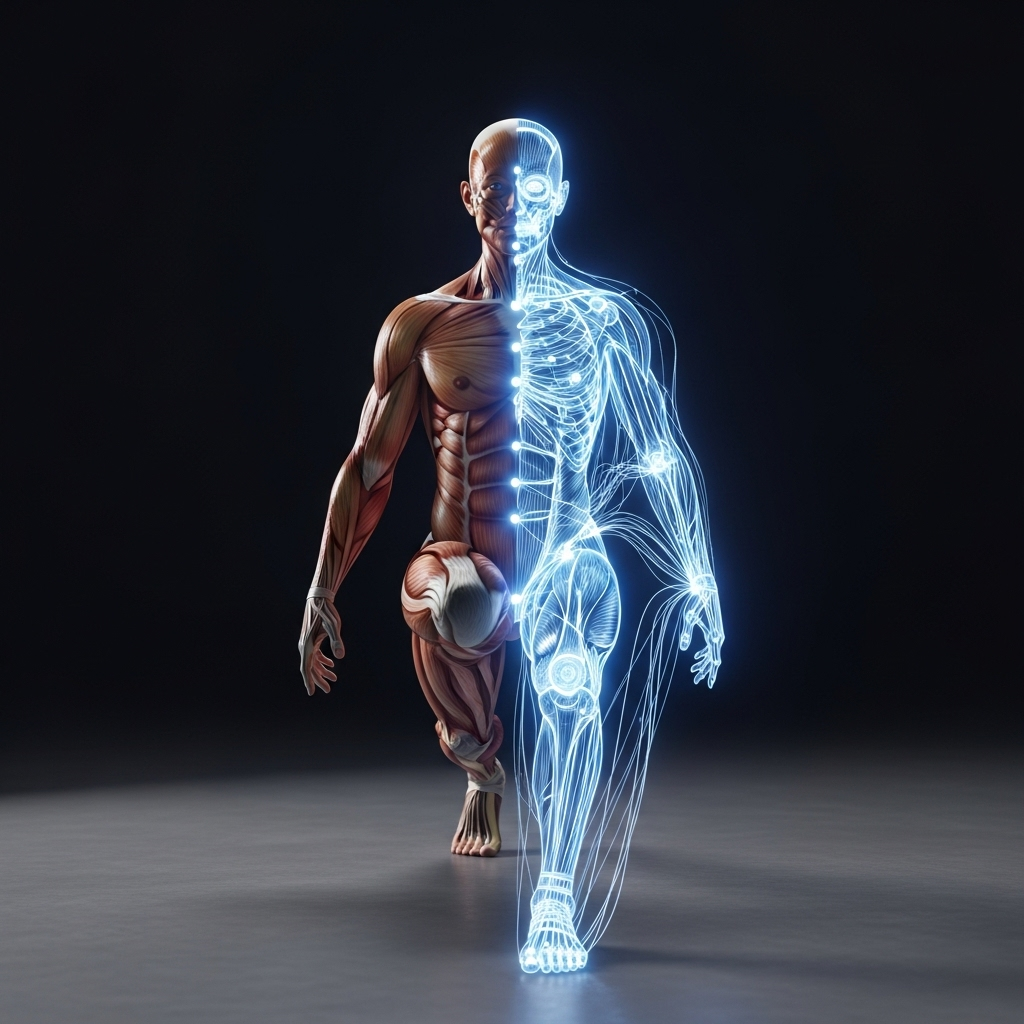
Powering next generation biomechanical analysis, interactive coaching, robotics, immersive gaming, patient outcome assessment, predictive analytics, fan engagement and much more.















Updates
View all-

Beyond the Next Token: Why We Are Building a Wo...
Generative AI mastered language. The next frontier is physical reality. Here is how our platform trains AI to understand physics, causality, and the kinetic world. If the last three years...
Beyond the Next Token: Why We Are Building a Wo...
Generative AI mastered language. The next frontier is physical reality. Here is how our platform trains AI to understand physics, causality, and the kinetic world. If the last three years...
-

Gemini 3 Pro: Significant Performance Increases...
When Gemini 3 Pro was released it was immediately apparent that the model was much more capable and we committed the engineering/development stack upgrade from 2.5 Pro same day. After...
Gemini 3 Pro: Significant Performance Increases...
When Gemini 3 Pro was released it was immediately apparent that the model was much more capable and we committed the engineering/development stack upgrade from 2.5 Pro same day. After...
-

Instrumentation & Digital Signal Processing For...
Programmatic 3D coordinate analysis extracted from video is helping us understand human motion in entirely new and unique ways. With advanced models we can pull a continuous stream of 3D...
Instrumentation & Digital Signal Processing For...
Programmatic 3D coordinate analysis extracted from video is helping us understand human motion in entirely new and unique ways. With advanced models we can pull a continuous stream of 3D...


Core Intelligence
-

DaVinci Physics Engine
Move beyond standard Computer Vision. Our proprietary engine derives ground truth through calculus, computing 3D velocity, acceleration, and jerk vectors directly from the skeletal rig. This approach bypasses optical occlusion and motion blur, generating high-fidelity kinetic data that visual tracking models simply cannot see.
-

Hierarchy of Truth Architecture
To eliminate AI hallucination, we enforce a strict data-sourcing protocol. Our system prioritizes calculated physics (Tier 1 Truth) over inferred pose estimation (Tier 2) and visual context (Tier 3). This architecture ensures that every insight is anchored in Newtonian laws, not just statistical correlation.
-

Context-Aware Cognitive Agent
This is not a chatbot; it is a persistent expert system. By maintaining a long-term context window of the athlete's biomechanical history, our agent acts as a reasoning engine. It queries the physics model to answer complex causal questions, adapting its technical depth based on the user’s expertise.


Perception & Orientation
-

Scale-Invariant Spatial Perception
Our World Model autonomously orients itself in 3D space. Using "Aspect Ratio of Motion" logic and sequential trend analysis, the system mathematically determines viewing angles and depth (Z-axis) without human input or calibration objects, effectively mimicking human proprioception.
-

3D Velocity Arbitration
We solve the visual occlusion problem through kinetics. Our system deterministically identifies handedness and action types by comparing the 3D peak velocities of end-effectors. It tracks the ballistic energy signature of the movement, allowing it to "see" the intent even when the limb is hidden from the camera.
-

Temporal Intent Detection
Signal processing meets cognitive modeling. Our "Quiet Eye" algorithms scan backward from kinetic peaks to identify the local minimum of core body velocity. This allows the system to isolate the precise moment of intent (the "Set Position") from the noise of the environment, ensuring sub-frame accuracy.


Scale & Simulation
-

Generative Predictive Simulation
Moving from analysis to forecasting. We utilize ensembles of probabilistic models to simulate thousands of potential outcomes from a single biomechanical event. This allows investors and teams to project future performance ceilings and injury risks based on current mechanical loads.
-

Event-Driven Serverless Pipeline
Built for massive concurrency. Our asynchronous architecture processes computer vision, physics calculations, and semantic reasoning in parallel. This serverless design ensures near-real-time latency and infinite scalability, capable of ingesting millions of frames without performance degradation.
-

Interoperable Kinetic Data Layers
We treat motion as code. Every analysis yields a standardized, validated JSON Data Dossier containing the full kinematic time-series, physics derivatives, and semantic context. This structured output is designed for immediate ingestion by LLMs, game engines, or robotic control systems.


